"When it opened up, it was sometimes deemed the highway to nowhere because there was nothing out there." In a WKRN report, Mark Hinesley, president and CEO of the Mt. Juliet Chamber of Commerce, described Golden Bear Gateway before Costco broke ground there. Costco opened in June 2024. Two years later, the same stretch of road is one of the busiest retail corridors in Middle Tennessee. For buyers comparing nearby homes, the citywide median doesn't tell the whole story.
If you've already looked at Mt. Juliet on the major portals, you've seen three different stories depending on which one you clicked. One shows the median sale price up 7.6% year over year as of March 2026. Another shows the typical home value down 1.4% over the same period. A third puts the median close to flat, down a fraction of a percent, with price reductions climbing from roughly 17% of listings to nearly 27% of listings. Those aren't rounding errors. They're three different ways of averaging a market that is no longer moving as one unit, and the reason has less to do with interest rates than with what's been built minutes off Interstate 40.
A corridor that filled in fast
Golden Bear Gateway sat mostly empty for years. The corridor's development timeline is easy to trace through city meeting minutes and local news coverage. Whataburger, Texas Roadhouse and a Dunkin' location were slated to follow the warehouse club. La Madeleine, a French bakery cafe, opened March 18, 2026 at 105 Legacy Pointe Boulevard, seating 56 inside and 22 on the patio, and hiring around 50 people for the launch. An In-N-Out location has been approved as part of the same development corridor. Amazon, Under Armour, Hollister and FedEx have facilities in the immediate area, including a five-story, 3.6-million-square-foot Amazon building nearby.
The bigger piece is Golden Bear Place, an 80-acre mixed-use project at Beckwith Road and Golden Bear Gateway that city commissioners approved after six rounds of amendments. As planned, it includes a 50,000-square-foot bowling alley and music venue, a Hyatt House hotel, storage units, retail, and up to 660 residential units split between market-rate apartments, 55-plus cottages and townhomes, and senior housing. The developer, Oldacre McDonald, told city leaders at the September 2024 groundbreaking they expected to complete the project within two to three years. As of this spring, local news outlets were still describing the site as under construction, which puts full buildout somewhere in the next year or so rather than already finished.
That's the setup. Here's what it means for a buyer trying to figure out where to put an offer.
What the median can't show you
A citywide median blends every sale into one number, which is exactly why the same market can look like it's rising, falling, and flat all at once depending on the source and the month sampled. What it can't show is how individual homes differ in distance from a retail corridor, property type and costs.
Over the past decade, Mount Juliet real estate has appreciated well above the national pace, a track record that put the city in the top 20% of U.S. markets for long-term home appreciation. That's a citywide figure built on ten years of transactions. It tells you the direction. It doesn't tell you that the appreciation isn't evenly distributed across neighborhoods, or that a corridor which didn't exist commercially five years ago is now doing more to shape values in its immediate radius than the citywide trend line suggests.
Two ways to buy proximity to the same corridor
This is where it gets concrete. Within a few minutes of Golden Bear Gateway, a buyer can choose between two fundamentally different products, and the price difference isn't really about square footage.
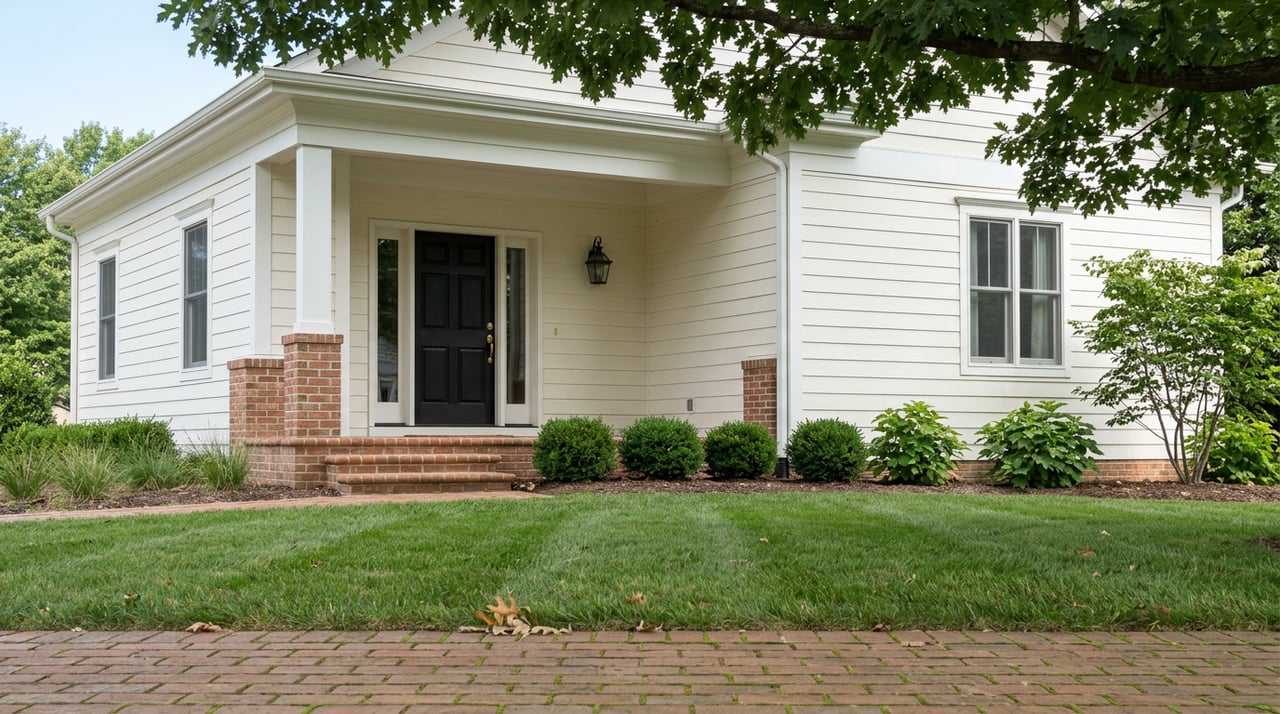
Established neighborhoods like Park Glen, built out mostly between 1988 and 2005 off Lebanon Road, sit inside walking distance of the corridor's shopping and dining without belonging to it. Park Glen has walking trails, sidewalks and mature tree cover, but no community pool or clubhouse, and its HOA dues reflect that: roughly $200 to $216 a year. Residents who want a pool use Charlie Daniels Park or the Mount Juliet Recreation Center instead of paying for one through dues.
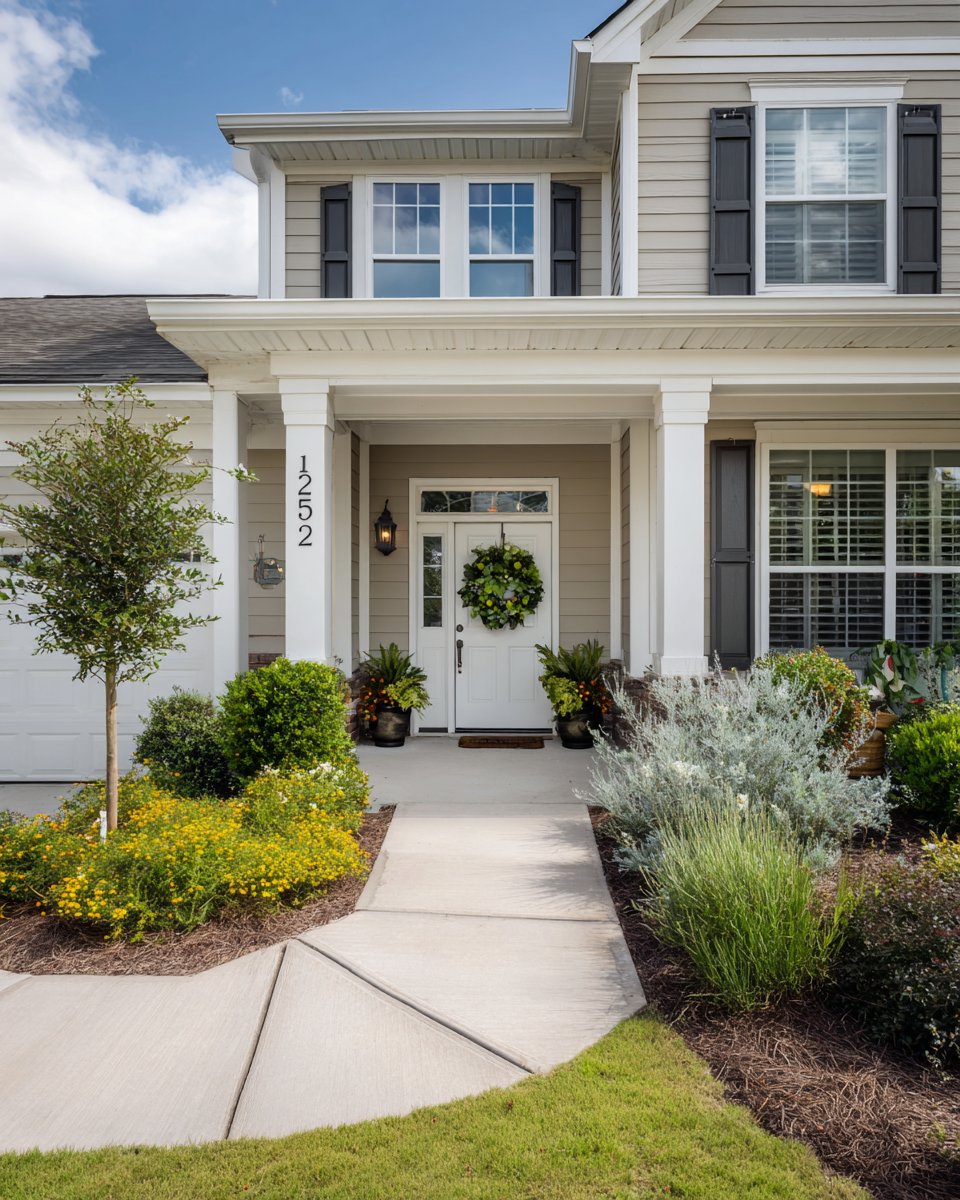
Newer construction communities filling in around the same corridor take the opposite approach: clubhouse, pool, splash pad, gym and walking trails built into the HOA structure, at a meaningfully higher price point and higher annual dues than a Park Glen-style resale. Neither approach is wrong. But they're not the same purchase, and a buyer comparing list prices without accounting for what's actually included is comparing two different products as if they were one.
| Established resale (e.g., Park Glen) | New construction with amenities | |
|---|---|---|
| Built | 1988-2005 | Current construction |
| Typical annual HOA | ~$200-216 | Higher, tied to amenity package |
| Pool/clubhouse | None (public park nearby) | Included in HOA |
| Tree cover | Mature | Newly planted |
| Proximity to Golden Bear Gateway | Minutes | Minutes |
Developer contributions for Golden Bear Place
When the city approved Golden Bear Place, commissioners attached a developer contribution of $7,500 per residential unit, split between $2,500 earmarked for road improvements on Golden Bear Gateway and Old Beckwith Road and $5,000 toward general project development, on top of an additional $1.4 million in other offsite improvements the developer agreed to fund. The contribution is part of Golden Bear Place's approved development plan. A resale in an established neighborhood a mile away was never subject to that same per-unit assessment, because it was built before the corridor needed the infrastructure spend.
Retail and planned community amenities
Retail arrived first; the park and aquatic center are still planned. A Mt. Juliet resident living near the corridor was quoted in a WKRN report as saying the area felt like "a commuter town," with no fountain, no town square, nothing that gave the corridor an identity beyond a place to stop on the way somewhere else. City Commissioner Scott Hefner pushed back on part of that characterization, noting that some retail spaces, including the bowling alley, were designed to be family-friendly, and that the city is planning a five-acre park on Golden Bear Gateway along with an aquatic center.
For buyers, that means weighing the convenience available now against amenities that remain part of the city's plans.
What this means if you're choosing a street, not a city
A few things worth carrying into a search near this corridor:
- Compare HOA dues against what they actually buy. A low-fee, no-amenity neighborhood next to a public park is a different value proposition than a high-fee neighborhood with a private pool, even at similar list prices.
- Keep the approved Golden Bear Place infrastructure contributions in mind when comparing new-construction prices with older subdivisions nearby.
- Watch the completion timeline on Golden Bear Place. A project still under construction means the commercial and entertainment draw closest to some neighborhoods hasn't fully arrived yet, which affects both convenience today and appreciation potential over the next two to three years.
- Don't assume the citywide median applies to the street you're considering. The divergence between reporting sources this year is a reminder that Mt. Juliet is no longer one market moving in one direction.
A quick FAQ
Is Golden Bear Gateway part of Mt. Juliet or a separate development? It's a road corridor within Mt. Juliet, near the Providence area, anchored by Costco and expanding with additional retail, dining and the Golden Bear Place mixed-use project.
When will Golden Bear Place be finished? The developer indicated a two to three year completion window from its September 2024 groundbreaking, and coverage this year still described the site as under construction, so full buildout is likely still ahead rather than behind.
Does proximity to a retail corridor like this always raise home values? Established resales and new construction near the corridor can differ in carrying costs and amenities. Those differences are worth comparing rather than assuming that proximity to retail raises every home's value.
Reading a market like this takes more than a median price. It takes knowing which streets are absorbing a corridor's growth and which are simply near it. If you're weighing a move near Golden Bear Gateway, or trying to figure out what a specific subdivision's HOA and price actually reflect, The Rounsaville Group can walk through the comparison street by street. Request a Private Consultation to start with the numbers that actually apply to the home you're considering.
This article is general information, not legal, tax or financial advice. Consult a qualified professional about your situation.